Who can access restricted data in a Digital Battery Passport? How can a repairer, recycler, or other eligible organization prove it has the right to access that information? Who is responsible for verifying their eligibility, and how is access granted without exposing sensitive battery data to unauthorized parties?
In our discussions around Digital Battery Passport implementation, one question keeps coming up: how do you make restricted information available to the businesses that genuinely need it, without making access unnecessarily complicated? It's particularly relevant for independent repairers and recyclers, who may need information from manufacturers they've never worked with before.
Under the EU Battery Regulation, certain restricted information is reserved for parties with a legitimate interest. The Commission's proposed implementing rules identify which actors, including repairers, remanufacturers, repurposers, and recyclers, would qualify for access to specific information. However, identifying eligible actors in the regulation is only part of the process. When an organization requests access, the economic operator or the Digital Battery Passport platform acting on its behalf still needs a way to establish that the organization is genuinely entitled to that information.
The European Commission's draft implementing regulation, published on 19 October 2026, clarifies who can access certain restricted data and how they can use it. But it does not establish one universal verification mechanism for checking an organization's professional eligibility.
This creates a practical challenge for manufacturers and passport providers: how do you distinguish a registered company from an eligible repairer or recycler without creating a complicated approval process for every individual business?
As Digital Battery Passport requirements approach on 18 February 2027, this question becomes increasingly relevant. Verifying a company's identity establishes who it is, but confirming its professional activity, relevant authorizations and entitlement to particular data requires a separate layer of checks.
Why is verifying an organization's identity not enough?
A company can prove that it is a registered legal entity without proving that it is entitled to access restricted battery data.
The EU Battery Regulation already separates Digital Battery Passport information into three access levels: public information, information reserved for authorities and notified bodies, and restricted information available to parties with a legitimate interest. It's this third category that creates the verification challenge. The draft identifies eligible actors and their access rights, but how can a passport provider confirm that someone requesting restricted data really belongs to one of those groups?
The EU Digital Product Passport Registry rules, established by Implementing Regulation (EU) 2026/1778, provide methods for verifying the identity of economic operators using the Registry. These include qualified electronic seals and qualified electronic attestations of attributes.
This is an important step, but there's a distinction worth making. Being verified in the EU DPP Registry doesn't automatically give a company permission to access restricted Digital Battery Passport information. The Registry verifies the identity of economic operators and other value chain actors, while eligibility to view restricted passport data depends on the relevant access rules.
The European Commission has also addressed this question in its Battery Passport FAQ. It explains that authentication will operate in a decentralized system rather than through one central EU verification service. National registers of recyclers, waste operators, and similar businesses may help establish professional eligibility. However, manufacturers and passport providers still need to consider how those checks will work in practice.
For example, a qualified electronic seal can confirm the identity of a repair business. It cannot, on its own, confirm that the business is authorized to repair batteries or holds the permits required for a particular activity. The same distinction applies to recyclers and waste treatment operators.
There is another important distinction: even if an organization is a verified repairer, that doesn’t give it unrestricted access to every Digital Battery Passport. Its access still needs to match the data category, purpose and specific request allowed under the applicable rules.
In other words, two separate questions need to be answered:
- Is this organization who it claims to be, and can it demonstrate the relevant professional activity?
- Is it entitled to access this particular information for this particular purpose?
Treating these as separate checks could make the process both more secure and easier to manage.
Who should verify whether an organization is eligible?
The Commission's draft identifies the actors that can access certain restricted information, but it doesn’t establish one universal mechanism for checking their professional eligibility. There are several ways the industry could organize this responsibility. Each has advantages, but also practical limitations.
1. Approval by each responsible economic operator
Manufacturers or other responsible economic operators could maintain their own lists of approved repairers, remanufacturers and recyclers. When an organization requests access, the operator would check its credentials and grant permission.
This approach offers direct oversight. Automotive manufacturers, for example, may already have established networks of authorized dealers and repair partners that could support the process.
However, it becomes more complicated outside those networks. Light means of transport (LMT) and industrial battery manufacturers may not have comparable partner structures. Independent repair shops and recyclers could also end up applying to multiple manufacturers separately.
As batteries move between owners, service providers and second-life applications, maintaining and updating these lists could become a significant administrative task. It would also make access more difficult for smaller businesses that work across several brands.
2. Verification by each Digital Battery Passport platform
Another option would be for passport platforms to verify organizations during onboarding. A platform could collect company documents, check relevant permits or other evidence, and manage access on behalf of the economic operators it serves.
This could reduce the workload for individual manufacturers, particularly when a platform already supports multiple customers and their supply chains.
The challenge is consistency. If every provider sets its own requirements, the same repairer might be accepted by one platform but rejected by another. Companies operating across several platforms could face repeated checks, while a paid account or a self-declared professional role should not be enough to unlock restricted information.
For this approach to work across the market, platforms would need clear criteria for acceptable evidence and a way to recognize reliable checks performed elsewhere.
3. Credentials issued by industry associations
Industry associations could also play a role. Many already have relationships with businesses in specific sectors and may have a good understanding of which members actively carry out repair, recycling or other relevant activities.
An association could issue a credential confirming a member's professional role, reducing the need for every manufacturer or platform to repeat the same checks.
However, membership alone is not proof of every qualification. Not all legitimate businesses belong to an association, and membership does not necessarily confirm that a company holds the specific environmental permits or authorizations required for a particular activity.
There would also need to be clear rules for how credentials are issued, how long they remain valid, and what happens when a business loses its authorization or leaves the association. Other platforms and economic operators would need to recognize those credentials as well.
4. Reusable, verifiable digital attestations
A fourth possibility is a reusable digital attestation issued by a competent public body or qualified trust service provider. It could confirm a specific attribute, such as a professional authorization, operating license or other officially recognized status.
Rather than asking every manufacturer or passport platform to repeat the same background check, an organization could present the credential when requesting access. The platform would then check who issued it, what it confirms, and whether it is still valid.
This could make verification more consistent across different providers and reduce repeated administrative work for businesses operating across the battery value chain.
The limitation is that a battery-specific attestation scheme has not been established by the regulations discussed here. The existence of qualified trust services does not mean that ready-made credentials for battery repairers, recyclers or other eligible actors are already available. Common recognition rules and reliable sources of professional information would still be needed.
From a practical perspective, this is where we see the most potential. If a repairer has already demonstrated its professional eligibility through reliable evidence, why should it need to repeat the same process for every Digital Battery Passport provider? A reusable verification system could make access easier for legitimate businesses while reducing administrative work for manufacturers. Of course, this would only work if providers agreed on how to recognize those credentials and continued to accept other reliable forms of evidence.
Importantly, this is a possible model for the industry to develop, not a verification method mandated by the current EU texts.
Should eligibility be verified once or for every access request?
Even after an organization has proved its professional role, the platform still needs to decide whether it can access the information it’s requesting.
Consider an independent repair shop that has already demonstrated that it carries out battery repairs. That status may establish its eligibility for certain categories of information. But it does not automatically justify access to every battery passport, or to every restricted data field within one.
The request still needs to be assessed against the specific battery, data category and intended purpose. A repairer requesting information to assess a battery before accepting a job is making a different request from a recycler seeking dismantling information at the end of its life.
This is why a two-stage approach could be useful:
1. Verify the organization. Establish its legal identity and confirm its relevant professional activity using reliable, reusable evidence. The verification should have a defined validity period and be updated if the organization's status changes.
2. Authorize each access request. Check whether the organization is entitled to the specific data it is requesting, for the stated purpose and within the relevant time period. The decision should be recorded, and access should be limited or revoked when it’s no longer needed.
This is one way we believe access verification could work in practice, rather than a process explicitly required by the Commission's draft. It would allow companies to reuse reliable professional credentials while keeping individual access decisions tied to the relevant information and purpose.
For independent businesses, this could make a real difference. If professional credentials were recognized across passport providers, repairers wouldn't need to complete the same checks for every manufacturer. At the same time, each provider would still need to enforce the applicable access rules.
What should happen after access is granted?
Verification does not end when a platform approves a request. Access needs to remain aligned with the conditions attached to the data.
Under the Commission's draft, most restricted information can only be used for specified purposes, such as evaluating a battery's condition or supporting repair, repurposing, remanufacturing, or recycling. Eligible actors may download information for those purposes, but they must not keep it longer than necessary. Sharing and publication are generally restricted, with specific exceptions, including disclosures to emergency services, poison centers, and certain authorities.
Safety-measures information is treated differently. Although access is still limited to the eligible groups identified in the draft, those groups may use, download, share, publish, and reuse that information without restriction. This distinction matters when designing permissions: not every restricted data category has the same rules once access is granted.
A practical access-management process should therefore account for more than a one-time approval. It should include:
- Evidence records: Keep track of the documents, authorizations or credentials used to establish an organization's eligibility.
- Data-specific permissions: Make sure the organization can only access the categories of information it is entitled to see.
- Purpose limitations: Connect access to the activity for which the information is requested.
- Access logs: Record who requested information, which data was made available and when.
- Expiry and revocation: Review permissions when credentials expire, professional status changes or the work requiring access is complete.
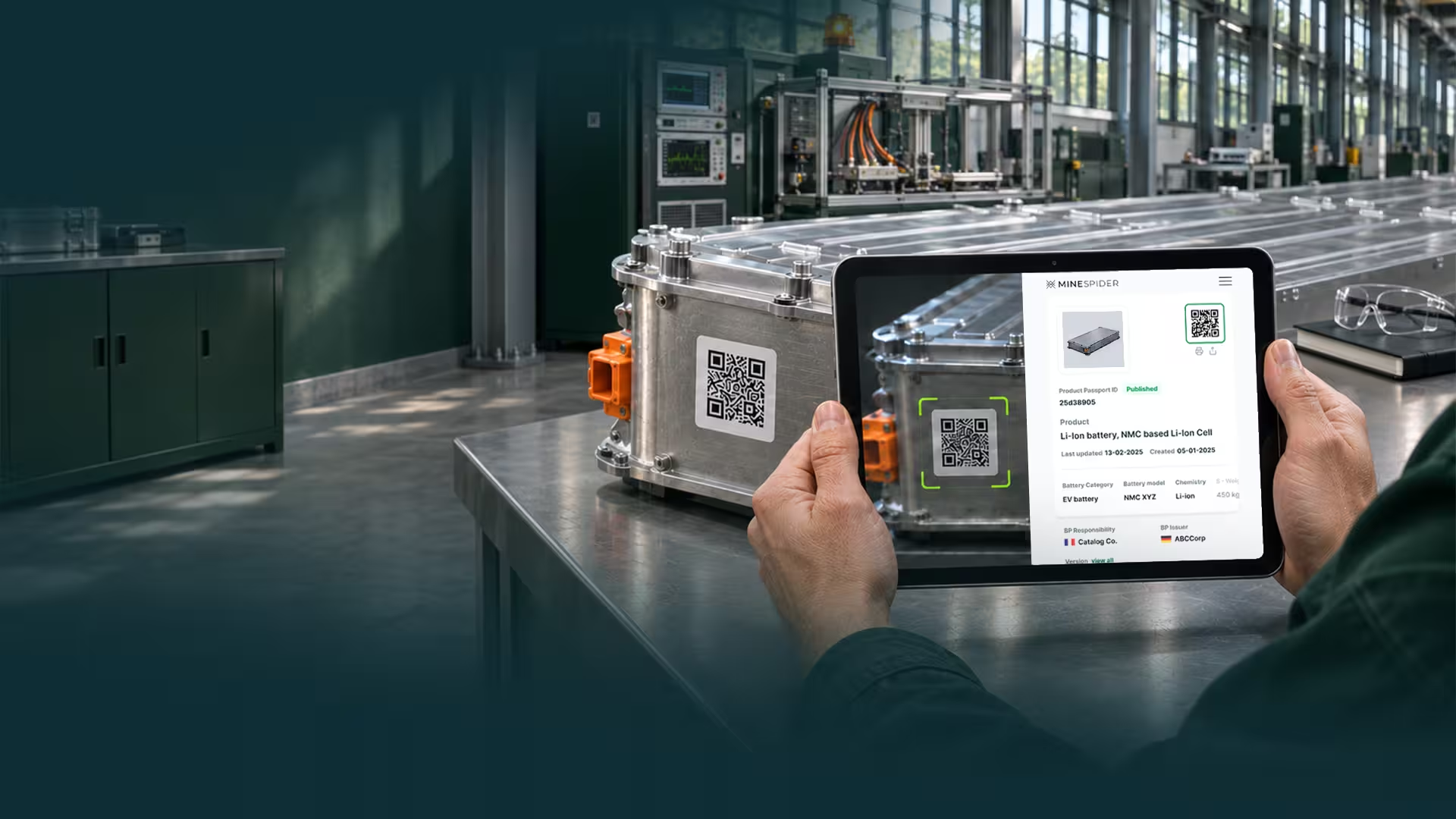
The QR code on a battery should not be treated as proof of entitlement. It provides a way to reach the Digital Battery Passport, but scanning or copying it does not establish that someone is eligible to view restricted information.
Physical possession of a battery is not enough as the only access check either. A repairer may need diagnostic information before the battery arrives at the workshop, for example. The process needs to establish both the organization's eligibility and the reason for the request without relying on a single signal.
It also needs to account for the battery's changing status and the different actors involved throughout its lifecycle. A company that is eligible to access information during repair may not be the same organization responsible for managing the passport when the battery becomes waste.
What still needs to be clarified?
The Commission's draft, published on 19 October 2026, provides a clearer framework for who can access specific restricted data and how that information may be used. Its public feedback period closed on 16 November 2026. However, the draft does not set out a shared process for verifying professional eligibility across different Digital Battery Passport providers.
Several practical questions remain:
- What evidence should a repairer, recycler or other eligible actor provide to demonstrate its professional activity?
- Who should be responsible for checking that evidence: the economic operator, the passport platform, a public authority or another trusted organization?
- Can a verification completed by one provider be recognized by another?
- How should credentials be updated, expire or be revoked when an organization's status changes?
- How can smaller independent businesses demonstrate eligibility without having to join proprietary networks or complete separate onboarding with every manufacturer?
While these questions remain open, manufacturers and Digital Battery Passport providers can already start preparing. A useful first step is to map which information is restricted, identify the organizations that may need access, and consider what evidence would be appropriate to verify their eligibility.
We also recommend testing the process with a realistic example. If an independent repairer requests detailed battery information, how would you verify the business? Who would make the access decision? And how would you make sure the repairer only receives the information it's entitled to use?
Working through these questions now can help manufacturers identify gaps in their access-management processes before Digital Battery Passports become mandatory in February 2027.
The challenge isn't just deciding who can access the information. It's making that access practical for legitimate businesses without compromising sensitive data.
Want to understand which Digital Battery Passport information is restricted?
Knowing how to verify eligible organizations is one part of the challenge. Manufacturers also need to understand which data different actors are allowed to access.
We've covered those requirements in our earlier guide: Battery Passport Access Rights: Who Can Access Which Data Under the EU's 2026 Draft Rules.