How Digital Battery Passports Turn EU Compliance into Battery Intelligence
Discover how Minespider helps organisations manage structured battery data for regulatory readiness, lifecycle visibility and better operational decisions.
A Battery Passport is a digital representation of a battery's life, including:

From 18 February 2027, every in-scope battery on the EU market must be registered in the EU Digital Product Passport registry, launching 19 July 2026. With Minespider, registration is a single click inside the app - no separate integration, no manual uploads.
Get guidance specific to your company and start preparing.

For more questions about the Battery Passports, please head here.
A Digital Battery Passport (also referred to as a Battery Passport in the EU Battery Regulation) is a digital record of a battery's identity, composition, sustainability performance, and lifecycle information, made accessible via a QR code on the battery. Under the EU Battery Regulation (Regulation (EU) 2023/1542), it can include data on raw material origin and sourcing, carbon footprint, recycled content, performance and durability, supply chain due diligence, and end-of-life information for reuse and recycling. Digital Battery Passports apply Digital Product Passport (DPP) principles specifically to batteries, with tiered access rights that determine what different stakeholders can see, including consumers, recyclers, repairers, and market surveillance authorities.
From 18 February 2027, a Digital Battery Passport is mandatory for three categories of batteries placed on the EU market or put into service:
The requirement applies regardless of where the battery was manufactured: batteries produced outside the EU but imported after 18 February 2027 must also comply. See our EU Battery Regulation Timeline for the full sequence of milestones.
For companies placing batteries on the EU market or putting them in service, a Digital Battery Passport will be a legal requirement from 18 February 2027 - without one, the battery cannot be sold or put into service in the EU.
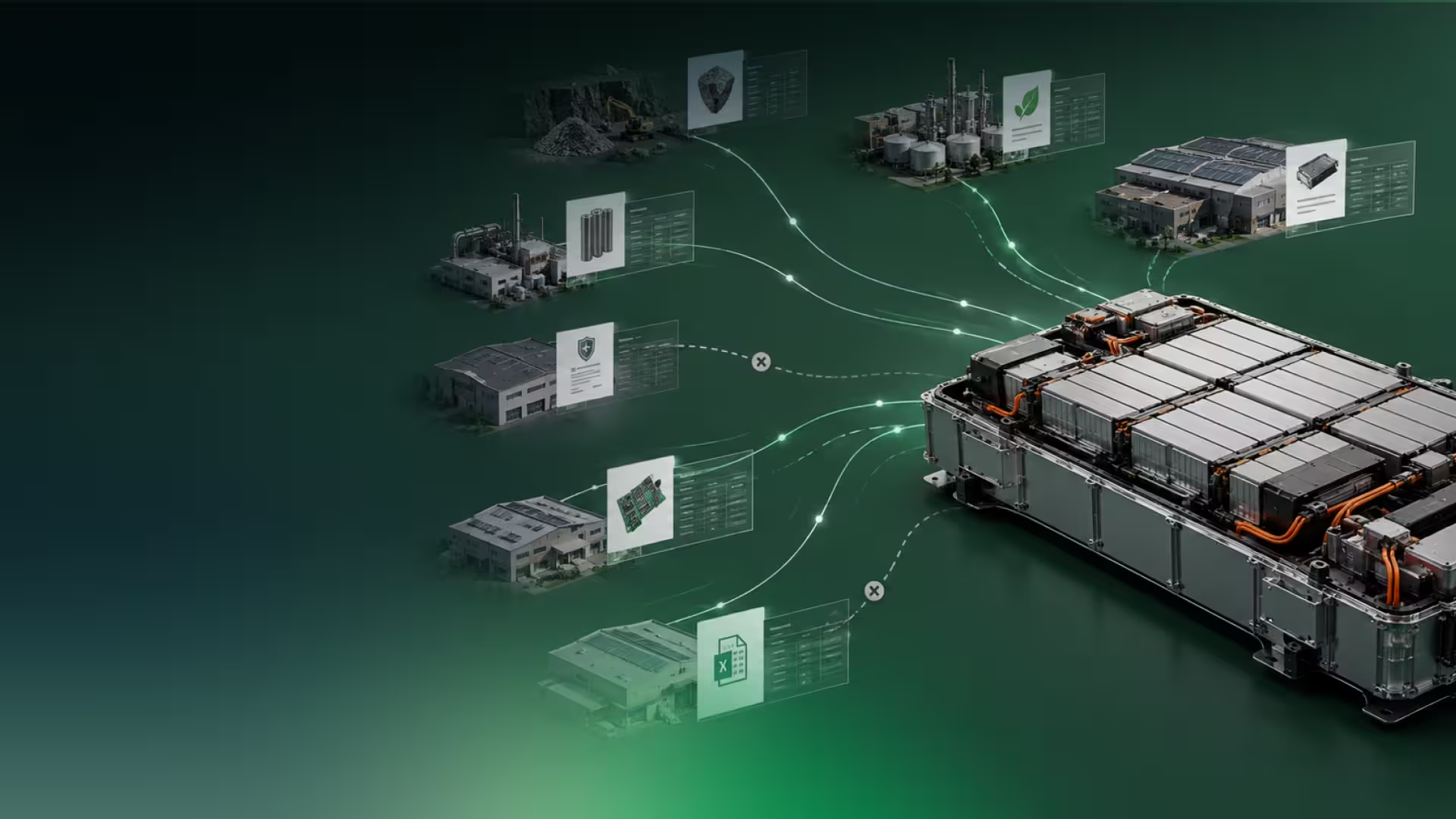
Beyond compliance, a Digital Battery Passport helps companies collect and share reliable battery information across complex supply chains. It improves traceability of raw materials, supports sustainability reporting (carbon footprint, recycled content, due diligence), enables better reuse and recycling decisions, and strengthens collaboration with suppliers, customers and recyclers. Minespider helps companies prepare by collecting, structuring and sharing the data needed across their supply chains.
The EU Digital Product Passport (DPP) registry is a central system operated by the European Commission under Article 13 of the Ecodesign for Sustainable Products Regulation (ESPR), scheduled to go live on 19 July 2026. It will store unique product identifiers that link physical products to their digital passports, and will be used by customs and market surveillance authorities to verify compliance.
Although batteries are regulated under the separate EU Battery Regulation, battery manufacturers will be required to upload unique identifiers to the DPP registry, connecting the two systems. The passport content itself is not stored centrally (it remains with the manufacturer or its service provider) but the registry confirms that the passport exists and that the product is allowed on the EU market.
Every in-scope battery placed on the EU market from 18 February 2027 must carry a data carrier - in practice, a QR code - physically affixed to the battery, its packaging, or accompanying documentation. Scanning the QR code resolves to the battery's Digital Battery Passport.
The data carrier must use open, interoperable formats (no vendor lock-in), and the underlying passport data must remain accessible for the lifetime of the product, even if the original company exits the market. This is why a QR code by itself is not compliant: the system behind it is what authorities will audit: structured data, persistent identifiers, access controls, and lifecycle updates.
The EU Battery Regulation defines tiered access rights for Digital Battery Passport data:
The specific data attributes for each tier are set out in Annex XIII of the regulation and will be further detailed in delegated and implementing acts (expected August 2026).
The EU Battery Regulation includes requirements covering carbon footprint, recycled content, origin of key raw materials (such as cobalt, lithium, natural graphite and nickel), and supply chain due diligence on environmental and social risks — including biodiversity, water, hazardous substances, labour rights, occupational health and safety, human rights and community impacts.
Preparing for these requirements means identifying what data is already available, where the gaps are, and which suppliers will need to contribute. Starting supplier engagement early is usually the longest pole in the tent.
The EU Battery Regulation has been adopted, and the Digital Battery Passport requirement starts on 18 February 2027 - and the DPP central registry goes live on 19 July 2026. Preparing for those deadlines requires more than adding a QR code: companies need to map data requirements, engage Tier 1 and Tier 2 suppliers, fix gaps in existing systems, and establish reliable processes for collecting and updating information across the battery lifecycle.
Starting now reduces compliance risk and gives time to pilot, refine and scale - rather than react under pressure. It also delivers business value beyond compliance: better supply chain visibility, stronger sustainability reporting, and more reliable data for customers and recyclers.
It typically takes 4 to 8 weeks from initial onboarding, to first Digital Battery Passports created, and key users trained. Supplier onboarding and system integrations can take additional months depending on complexity. Every implementation is adapted to the organization's data readiness and priorities.
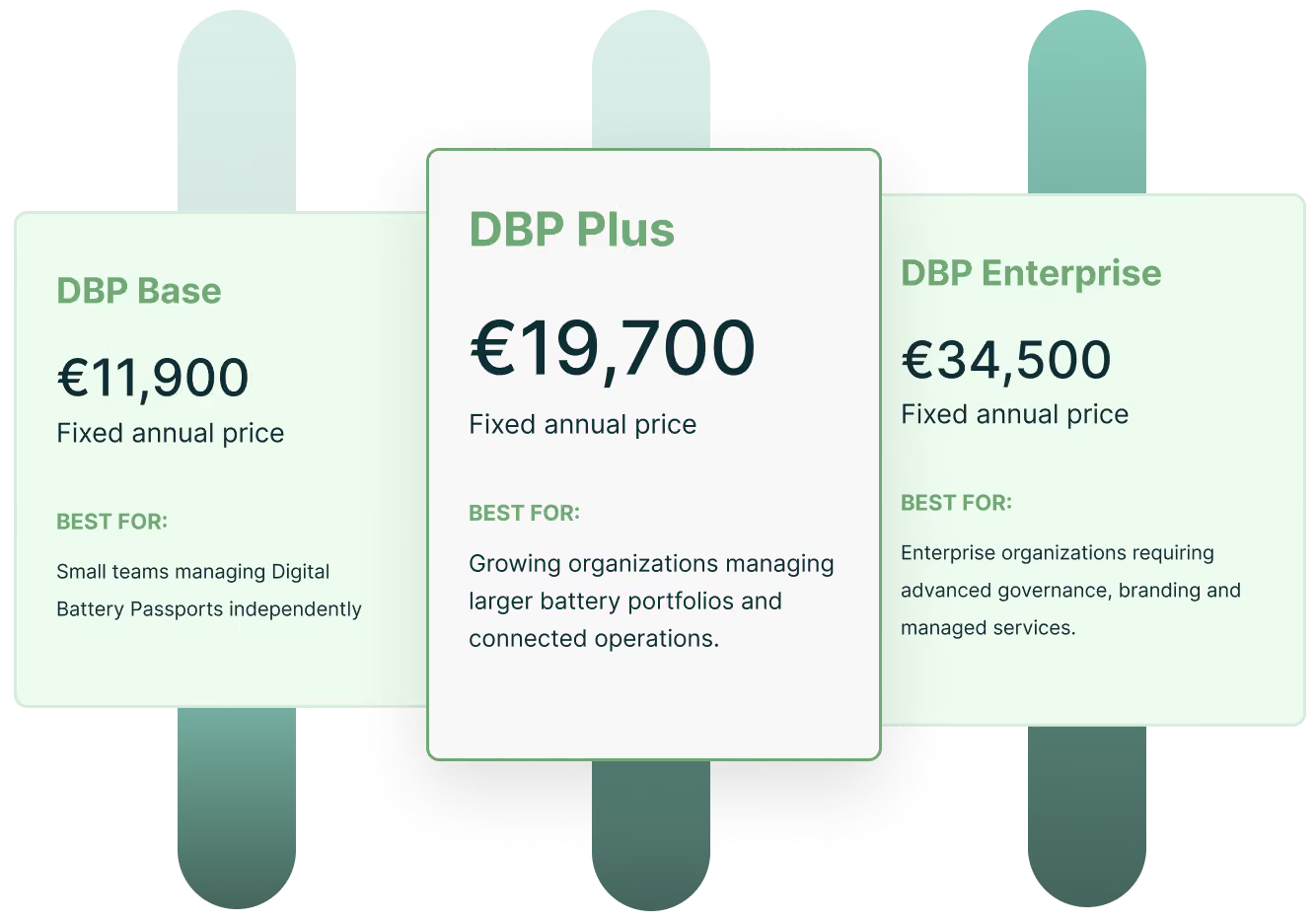
Minespider uses flat annual pricing, which includes unlimited Digital Battery Passports, no fees tied to volume, users, or production scale. This gives predictable long-term costs as your implementation grows. Please contact our sales team for a fast quote.
Based on the latest available regulatory requirements and industry longlists, a Battery Passport generally contains around 100 data attributes. However, the exact number may vary depending on the battery category (e.g. EV, LMT, or industrial batteries), as some attributes are category-specific, optional, or non-mandatory under the current framework.
Under the EU Battery Regulation (EUBR), Member States are responsible for defining and enforcing penalties for non-compliance. A battery that does not meet the applicable regulatory requirements, including Battery Passport obligations, cannot legally be placed on the EU market. As a result, market access may be restricted or blocked. Enforcement and compliance checks are to be carried out by national market surveillance authorities.