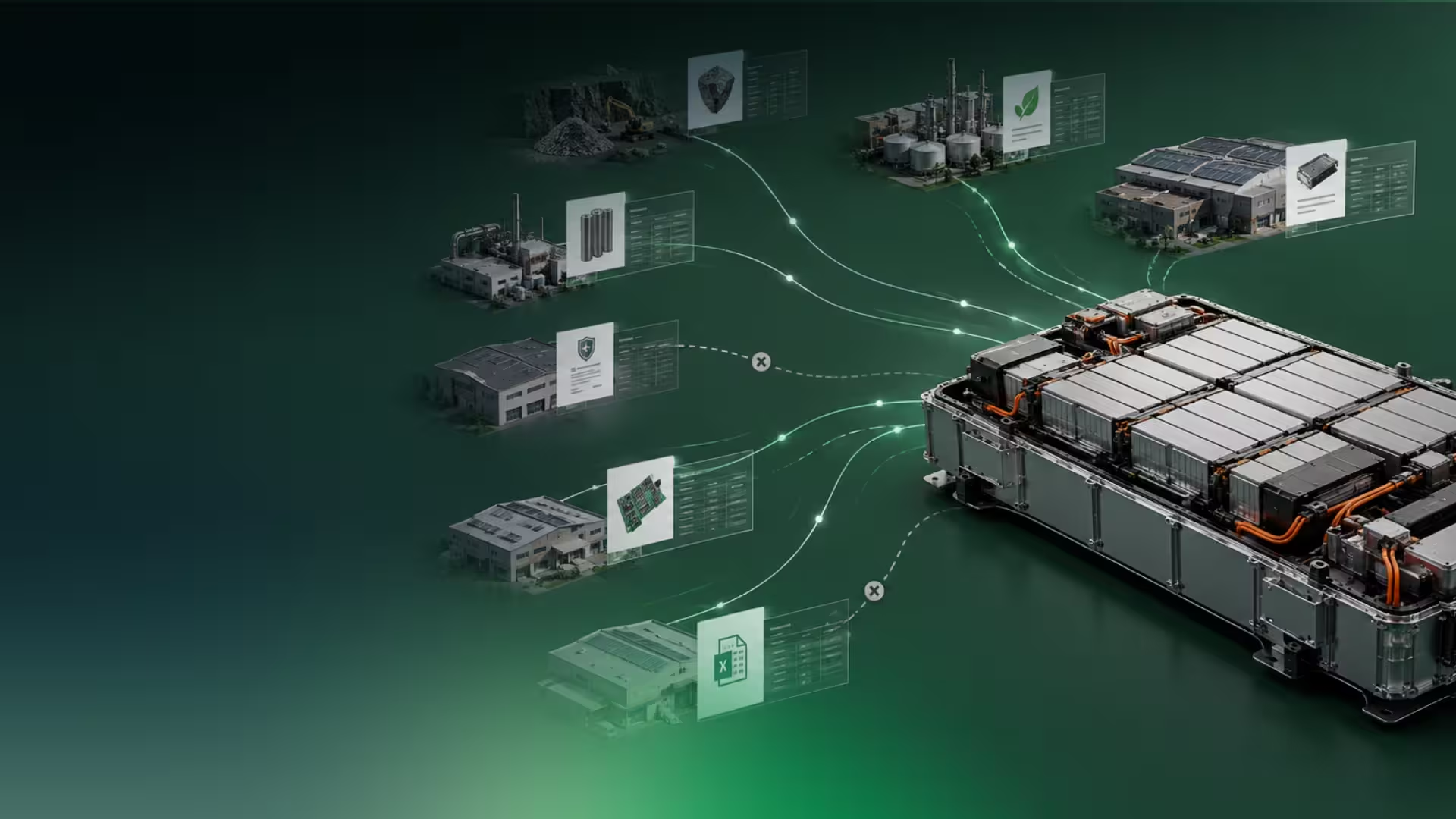
Implementing a Digital Battery Passport is rarely about starting from zero. For most companies, battery data already exists across the business. Product specifications live in PLM systems. Manufacturing data comes from ERP or MES platforms. Suppliers maintain declarations, certificates, and material information in their own systems. Operational battery data may come from Battery Management Systems (BMS), while compliance documents often sit in separate repositories or document management platforms.
The challenge is not only collecting information, it's bringing existing information together in a structured way that supports regulatory requirements while fitting into everyday business processes.
That's why integration is one of the first topics companies raise when planning a Digital Battery Passport project. But the good news? Thankfully implementing a Digital Battery Passport doesn't mean replacing your existing IT landscape.
Minespider is designed to work alongside the systems companies already use, allowing them to collect, manage, structure, review, and share passport information without disrupting established processes. Whether data arrives through APIs, spreadsheets, supplier uploads, or document extraction, the platform helps transform scattered information into structured Digital Battery Passports that remain useful throughout the battery lifecycle.
Do you need API integration from day one?
One of the biggest misconceptions about Digital Battery Passport implementation is that it always begins with a complex API project.
In reality, companies are at very different stages of digital maturity. Some already have advanced ERP, PLM, and manufacturing systems connected through integration platforms. Others still rely on spreadsheets, manually maintained supplier information, or PDF documentation. Many operate somewhere in between.
Because of this, there is no single implementation path. Some choose to start with manual passport creation to understand the required data and validate internal workflows. Others use CSV or Excel imports to create pilot passports before investing in automation. Companies with mature IT environments may decide to integrate directly with existing systems from the outset.
Organizations can begin with manual data entry, AI-assisted document extraction, or batch uploads, then gradually introduce API integrations as passport volumes increase and internal processes mature.
This phased approach allows teams to focus first on data quality and business processes before tackling technical automation.
Can Minespider integrate with ERP, PLM, BMS, MES, and existing business systems?
Digital Battery Passport data rarely comes from a single application. A complete passport often combines engineering information, manufacturing records, supplier declarations, compliance documentation, and operational battery data.
For many manufacturers, this information already exists across systems such as:
- ERP platforms
- Product Lifecycle Management (PLM) systems
- Manufacturing Execution Systems (MES)
- Battery Management Systems (BMS)
- Supplier portals
- Laboratory and testing systems
- Sustainability or lifecycle assessment tools
- Internal databases
- Document management platforms
Rather than replacing these systems, Minespider connects to them.
Depending on the implementation, information can be transferred through API integrations, structured file imports, reusable templates, supplier submissions, or middleware that consolidates data before it reaches the passport platform.
This allows organizations to continue managing source data where it already belongs while using Minespider to structure, manage, and publish Digital Battery Passport information.
For companies with mature integration capabilities, APIs enable automated passport creation and updates directly from existing business systems. Others may prefer structured imports, recurring imports, or integration layers, depending on the implementation.
The right architecture depends on each company's existing technology landscape rather than forcing a predefined implementation model.
"One of the biggest misconceptions is that companies need to rebuild their systems to implement a Digital Battery Passport. In reality, most already have the data, they just need a structured way to connect it. Our goal is to integrate with existing ERP, PLM, BMS, and manufacturing systems so passport data becomes part of everyday operations, not another disconnected process."
— Hugo Abreu, Lead Software Developer
How do suppliers contribute data to a Digital Battery Passport?
Internal systems rarely hold the full picture. The critical data for your Digital Battery Passport, such as material composition, certificates, test reports, and due diligence evidence, often lives with your suppliers. We see that collecting this manually is a common bottleneck, especially when working with hundreds or thousands of partners.
To build a scalable Digital Battery Passport, you need a flexible supplier workflow. Minespider supports several contribution paths:
- Structured templates: Standardized data entry that cuts down on errors.
- Direct document uploads: For certifications, test reports, and supporting evidence.
- API-based exchange: For suppliers with mature digital workflows.
- Reusable data structures: Allowing supplier information to be reused across relevant products, customers, or workflows where appropriate.
By offering these paths, you move away from repetitive, one-off email requests. Instead, you build a consistent, repeatable supplier workflow that improves data quality. This isn't just about meeting compliance deadlines; it’s about establishing the supply chain transparency that will be critical for future regulations beyond Digital Battery Passports alone.
Can Minespider support both pilot projects and enterprise-scale Digital Battery Passports?
One of the biggest misconceptions about Digital Battery Passports is that every implementation has to start with a complex systems integration.
In reality, most successful projects begin much more simply.
Before connecting ERP systems, battery management platforms, or supplier portals, companies first need to understand what data they already have, where it lives, who owns it, and what information is still missing.
That is why many organisations start by creating a small number of Digital Battery Passports manually or through CSV and Excel imports. This allows teams to validate the passport structure, identify data gaps, test supplier collaboration, and understand how information will be presented before investing in automation.
Once these processes are established, the same workflow can be expanded using reusable templates, batch uploads, and API integrations that automate passport creation at scale.
This phased approach reduces project risk while allowing technical teams to build integrations around proven business processes rather than assumptions.
Whether a company is creating a small number of passports for a pilot or scaling toward production volumes the underlying objective remains the same: creating a repeatable process that can grow alongside the business.
How does Minespider support static and dynamic Digital Battery Passport data?
Digital Battery Passports both static and dynamic data throughout the battery's operational life.
Static data includes details such as manufacturer information, material composition, production location, technical specifications, compliance documentation, and product identifiers.
Dynamic data reflects how the battery performs after it enters service. Depending on the use case, this may include information on the State of Health (SoH), State of Charge (SoC), remaining capacity, cycle count, operating conditions, service history, repairs, ownership changes.
Not every organisation needs to update every field continuously.
Some information is best updated on a scheduled basis, while other data only changes when a significant lifecycle event occurs, such as a repair, refurbishment, or transfer to a second-life application.
The important consideration is not how frequently information is updated, but whether the data is reliable, structured, and meaningful for the intended use case.
Can Digital Battery Passports be updated after they are created?
Creating a passport is only the beginning.
We often see that as products move through manufacturing, distribution, use, maintenance, refurbishment, and recycling, new information becomes available that may need to be reflected in the passport.
Suppliers may submit revised declarations. Compliance documents may be replaced. Products may undergo repairs or component replacements. Batteries may move into second-life applications before eventually reaching recycling facilities.
Rather than creating a new passport each time something changes, Minespider supports structured updates and version management.
This allows companies to maintain a single digital record throughout the product lifecycle while preserving the history of previous versions for traceability and audit purposes.
The result is a passport that evolves with the product rather than becoming outdated shortly after production.
How are batteries connected to their Digital Battery Passports?
We believe Digital Battery Passport only delivers value if users can easily access the correct information for the physical product in front of them.
This connection is typically established through unique identifiers and QR codes.
Depending on the implementation, companies may use identifiers such as the Unique Battery Identifier (UBI), GS1 Digital Link, customer-specific identifiers, or other recognised identification schemes.
QR codes can point directly to a Minespider Digital Battery Passport or use a customer-controlled redirect that provides additional flexibility without changing the printed code.
As passport information changes over time, with the right identifier and redirect setup, version management can allow users to access the latest passport information without relabeling the product each time data is updated, while maintaining historical records where appropriate.
This means products do not need new labels every time information is updated.
How does Minespider control public and private Battery Passport data?
Not every piece of Digital Battery Passport data should be visible to every user.
Some information is intended for public access through a QR code, while other data may contain commercially sensitive supplier information, detailed technical documentation, or confidential operational records.
Minespider allows companies to manage different data visibility levels depending on the audience and select which documents and data is specifically visible to whom
Manufacturers, suppliers, customers, auditors, service providers, recyclers, and regulatory authorities may each require access to different parts of the passport throughout the product lifecycle.
By separating public and restricted information, organisations can meet transparency requirements while protecting confidential business data.
This becomes increasingly important as supply chains grow more collaborative and more organisations contribute information to the same Digital Battery Passport.
Can Minespider manage documents, certificates, and compliance data?
Digital Battery Passport is more than a collection of structured data fields. It also brings together the documents and evidence needed to demonstrate compliance throughout the battery lifecycle.
Depending on the product and regulatory requirements, this may include Declarations of Conformity, test reports, supplier declarations, due diligence documentation, carbon footprint information, repair records, service reports, recycling documentation, and other supporting files.
Rather than storing this information separately, Minespider allows supporting documentation to be linked directly to the relevant passport, helping companies keep product data and compliance evidence connected in one place. This makes it easier for manufacturers, customers, auditors, and regulators to access the information they need while maintaining a clear audit trail.
As Digital Product Passport & Battery Passport requirements continue to evolve, keeping documentation organised alongside structured passport data will become increasingly important for demonstrating compliance and reducing administrative effort.
How does Minespider protect data ownership and security?
One of the most common concerns companies raise is who owns the data once it is stored in a passport platform.
With Minespider, organisations remain in control of the information they provide. The platform helps companies structure, manage, and share passport data, while allowing them to define how information is accessed and by whom.
This is particularly important because Digital Battery Passports often contain a combination of public information and commercially sensitive data.
Public information can be made available through QR codes and public passport pages, while confidential supplier information, technical documentation, operational data, or customer-specific records remain accessible only to authorised users.
In the Minespider passport platform there are access controls, structured data governance, and version history to help ensure that passport information remains accurate, traceable, and appropriately controlled throughout the product lifecycle.
Is Minespider ready for future EU Battery Passport requirements?
As the EU Battery Regulation continues to be implemented, new technical specifications, interoperability requirements, and registry processes will emerge over time. Companies therefore need solutions that can adapt as requirements evolve.
Minespider stays up-to-date on new implementing acts, and supports evolving registry and interoperability requirements, including EU DPP Registry-related workflows and industry initiatives such as Catena-X.
By building on adaptable data models and integration workflows, companies can reduce the need for major system redesigns as regulations continue to mature.
What should companies prepare before implementing a Digital Battery Passport?
Technology is only one part of a successful Digital Battery Passport project. Before any integration begins, companies benefit from understanding where their data comes from, who owns it, and how it should be managed throughout the product lifecycle.
Typical preparation includes identifying:
- The passport data required for their battery product category
- Where that information is currently stored
- Which internal teams own each dataset
- Which suppliers need to contribute information
- The identifier and QR-code strategy
- Which information is static and which will change over time
- How documents and supporting evidence will be managed
- Which data should be public and which should remain restricted
- Expected passport volumes and implementation timelines
Completing this data-mapping exercise early helps organisations identify potential gaps before technical work begins and provides a clear roadmap for implementation.
Many companies find that this planning stage is just as valuable as the integration itself, as it creates a shared understanding across engineering, manufacturing, sustainability, procurement, compliance, and IT teams.
"Every customer starts from a different point. Some begin with spreadsheets, while others already have ERP and PLM systems in place. We see that the most successful implementations don't try to automate everything on day one. They start by understanding the data, validating the workflow, and then building a roadmap that scales over time."
— Dimitar Klimoski, Project Manager
How can companies scale Digital Battery Passport workflows?
Every organisation starts from a different point. Some are creating their first pilot passports. Others are preparing to automate passport creation across multiple production sites and thousands of products. Many are still identifying where their data exists and how different business systems should work together.
For this reason, successful implementations are rarely delivered through a single project or integration.
Instead, organisations typically begin by validating their data, building initial passports, and establishing supplier collaboration before gradually introducing automation, dynamic lifecycle data, and deeper integration with enterprise systems.
This phased approach allows companies to demonstrate value quickly while building a foundation that can grow alongside future regulatory requirements and business needs.
Why choose Minespider for Digital Battery Passport implementation?
At Minespider, we see Digital Battery Passports as connected digital records that bring together engineering data, manufacturing information, supplier contributions, lifecycle events, supporting documentation, and regulatory requirements in one place. Digital Battery Passports are becoming a core part of how battery information is managed throughout the product lifecycle.
We support this transition by helping companies connect existing systems, collaborate across supply chains, manage structured passport data, and scale from early pilots to enterprise-wide deployments.
Whether organisations begin with manual uploads, supplier templates, or fully integrated enterprise workflows, the objective remains the same: creating Digital Battery Passport processes that are accurate, scalable, and ready for the future.
As regulatory expectations continue to evolve, companies that establish connected, well-governed passport workflows today will be better positioned to meet future compliance requirements while gaining greater visibility across their products and supply chains.
Ready to build your Digital Battery Passport strategy?
Whether you're evaluating your first Digital Battery Passport project or planning enterprise-wide deployment, Minespider provides the tools to support every stage of the journey - from manual data collection and supplier collaboration to API integration, lifecycle updates, and scalable passport management.
View our API documentation to learn how your existing systems can support future-ready Digital Battery Passport workflows. - https://developers.minespider.com/